
Caring for Natural Stone
Natural stone is a living material. With the right sealing, daily care, and preventive habits, marble, granite, and every stone in our library will look exceptional for decades.
Start With the Right Sealer
Most natural stones are porous. A penetrating (impregnating) sealer sits below the surface and slows the absorption of water, oils, and stains without changing the look of the stone. Sealing is the single most effective step in protecting marble, limestone, travertine, and honed finishes.
- Seal after installation and before first use, once the stone is fully clean and dry
- Re-seal marble, limestone, and travertine every 6-12 months; granite and quartzite every 1-3 years
- Test with a few drops of water - if it darkens the stone within minutes, it is time to re-seal
- Engineered quartz and porcelain are non-porous and do not require sealing
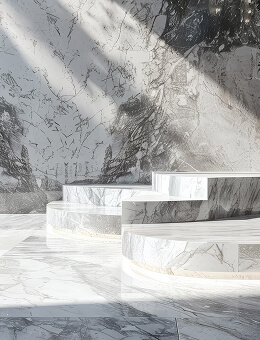
Stone That Looks Exceptional for Decades
With the right sealing, daily care, and preventive habits, marble, granite, and every stone in our library will age beautifully.
Simple Habits That Protect the Surface
Use a pH-neutral cleaner
Acidic or alkaline products - vinegar, lemon, bleach, and many bathroom sprays - etch and dull calcium-based stones such as marble, limestone, travertine, and onyx.
Wipe spills immediately
Blot rather than wipe. Oils, wine, coffee, juice, and cosmetics can penetrate even sealed stone if left to sit.
Dust-mop floors
Grit and sand are abrasive. Sweep or dust-mop stone floors daily and use entrance mats to reduce scratching.
Soft cloths only
Use a soft microfibre cloth or mop. Avoid scouring pads, abrasive powders, and steel wool.
Rinse and dry
Rinse with clean water after cleaning and dry the surface to prevent water spots and streaking.
Protect the surface
Use coasters, trivets, and cutting boards. Never place hot pans directly on the stone.
Identify the Stain, Then Treat It
Most stains can be lifted with a poultice - an absorbent paste left on the stain for 24-48 hours under plastic film. Always test in an inconspicuous area first, and contact us before treating valuable or unusual stones.
Oil-based
Grease, cooking oil, cosmetics. Poultice with a mild household detergent, baking soda, or a stone-safe degreaser.
Organic
Coffee, tea, wine, fruit, leaves. Poultice with 12% hydrogen peroxide and a few drops of ammonia (test first on dark stone).
Metal / rust
Iron or copper marks from planters and fittings. Require a specialist rust-removal poultice - do not scrub.
Water spots & rings
Buff with a dry soft cloth or fine 0000 steel wool on polished granite only; marble may need re-polishing.
Etch marks
Dull spots on marble, limestone, or onyx caused by acids. Light etching can be buffed with a polishing compound; deep etching needs professional re-honing.
Mould & mildew
Common in wet areas. Clean with a diluted stone-safe solution and improve ventilation; re-seal once dry.
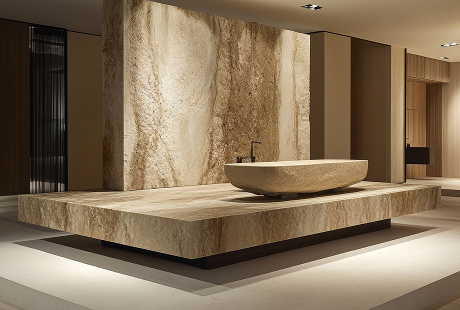
Long-Term Care Tips
- Schedule professional deep cleaning and re-sealing for high-traffic floors every 12-24 months
- Have polished marble and limestone floors periodically re-polished or crystallised to restore shine
- Inspect grout and silicone joints annually, especially in wet areas and exterior applications
- Use felt pads under furniture and lift rather than drag heavy items
- Keep a record of the stone type, finish, and sealer used for every area of your project
Stonetta's Contracting division offers restoration, re-polishing, and maintenance programmes for existing stone installations.
Every Stone Has Its Own Needs
Marble
Calcium-based and acid-sensitive. Seal regularly, use pH-neutral cleaners only, and expect a soft patina on honed floors over time.
Granite
Dense and hard-wearing. Seal every 1-3 years; resists heat and scratching but oils can still mark if left.
Quartzite
Very hard and generally acid-resistant, but porosity varies - seal on installation and test annually.
Onyx
Delicate, translucent, and acid-sensitive. Best for low-traffic feature walls, vanities, and backlit panels; clean with a soft cloth only.
Travertine
Naturally pitted; filled and sealed surfaces are easiest to maintain. Avoid acids and re-seal in wet or outdoor areas more often.
Limestone
Soft and porous. Seal thoroughly, keep away from acids, and use mats in entrances to prevent grit wear.
Quartz (engineered)
Non-porous and low-maintenance. Clean with mild soap and water; avoid harsh solvents and direct high heat.
Porcelain
Non-porous and highly durable. Suitable for exterior and high-traffic use; standard cleaners are fine.
Need Help With Your Stone?
Request the full care guide, or book an on-site assessment with our maintenance team.